
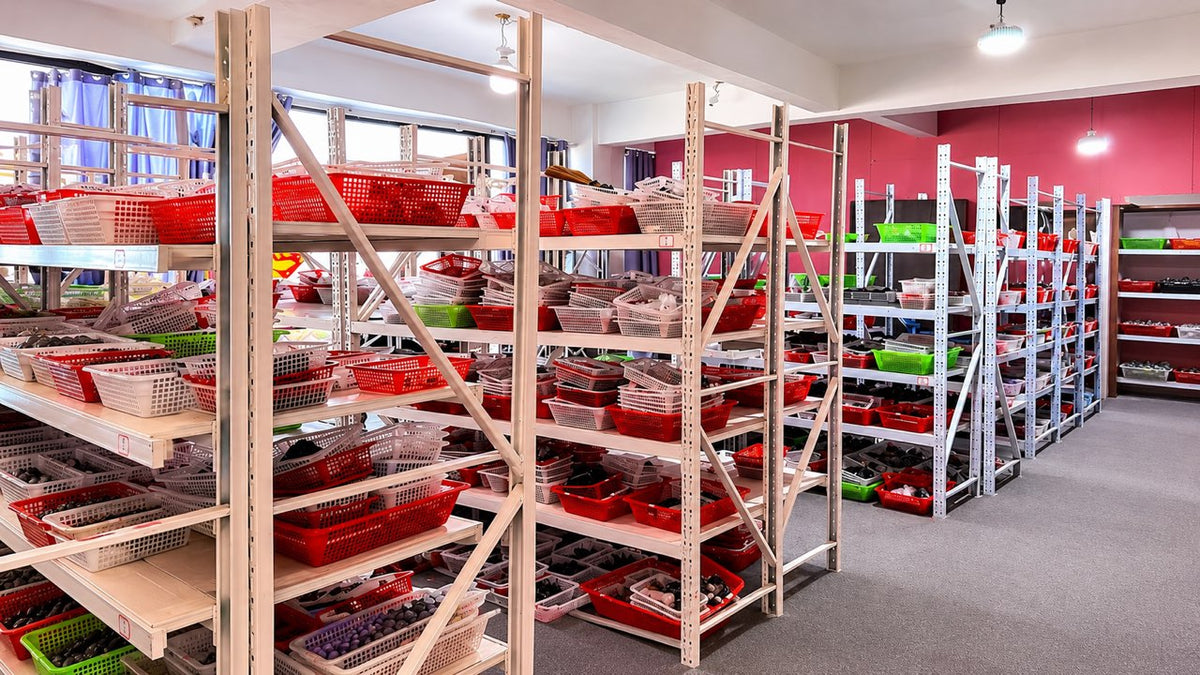
A Guide to Ordering Large Wholesale Crystal Quantities
Importers and distributors often ask what's different about sourcing crystal products at scale compared to smaller retail orders. Large-volume buyers face a different set of planning questions than a retailer placing a first small order. V…
Importers and distributors often ask what's different about sourcing crystal products at scale compared to smaller retail orders. Large-volume buyers face a different set of planning questions than a retailer placing a first small order. Volume changes what needs to be specified up front, how packaging and logistics need to be planned, and how communication with a supplier is structured over time. This guide covers what large-quantity buyers should prepare and confirm before placing a bulk order, without assuming specific terms that vary by supplier and by order.
1. Why Large Orders Require Different Planning Than Small Ones
A first order for a single retail store is largely about assortment — choosing the right mix of materials and forms for a specific display. A large-volume order shifts the central questions toward consistency at scale, logistics coordination, and specification precision, since small ambiguities can carry a larger impact when applied across a much larger quantity.
A sizing or color discrepancy that's a minor inconvenience on a small order can become a more significant issue at scale. This is one reason large-volume buyers often invest more time in specification and confirmation before placing an order.
2. Quantity Planning: Start With Your Own Demand Forecast
Before approaching a supplier about a large order, it helps to have a reasonably grounded internal estimate of demand — whether based on existing sales history, retail partner commitments, or market research specific to your business. Large orders represent a significant capital and storage commitment, and quantity planning is often anchored more usefully in your own business data than in a supplier's suggested order size.
It also helps to plan around realistic sell-through timelines. Buyers who plan quantity purchases against a clear timeframe, rather than an open-ended approach, often find it easier to manage inventory turnover and cash flow.
3. Product Specifications Are Worth Documenting Precisely
For large orders, loosely described specifications can create more risk than they would for small orders, simply because of the volume involved. Before placing a bulk order, it helps to prepare a detailed wholesale sourcing request by documenting specifications such as:
- Exact material names and any acceptable color range
- Size specifications, including acceptable tolerance ranges
- Form and finish requirements (tumbled, polished, raw, etc.)
- Any grading or quality expectations, described as specifically as possible rather than relying on general terms like "high grade"
Written specifications serve two purposes: they reduce the chance of miscommunication, and they give both buyer and supplier a clear reference point if a quality question comes up after the order arrives.

4. Packaging for Bulk Shipment
Packaging needs for a large order differ from small-order packaging in both function and scale. Large wholesale orders may involve freight, palletized shipment, or other logistics arrangements depending on order size, destination, and agreed shipping method. Considerations worth discussing with your supplier include:
- How individual items are protected within bulk packaging to reduce shifting and impact damage during transit
- How packaging is organized for efficient unloading and inventory processing on arrival — labeled by material, size, or batch, for example
- Whether packaging materials meet the import requirements of the destination market, where applicable
Specific packaging formats and services should be confirmed directly with your supplier as part of the order process, since practices vary.
5. Shipping and Logistics Preparation
Large-volume orders often involve freight arrangements rather than standard parcel services, which introduces logistics steps worth preparing for:
- Confirming which party is responsible for arranging freight, and under what shipping terms
- Understanding customs and import documentation requirements for your destination market
- Planning warehouse or storage capacity to receive a large shipment on arrival
- Building in reasonable buffer time for customs clearance and inland transport, since these steps often involve parties outside any single supplier's control
Shipping timelines for large freight orders depend on multiple parties and variables, so it's more useful to plan around an estimate confirmed by your specific supplier and freight partner than to assume a fixed timeline in advance. Specific customs and documentation responsibilities should be confirmed before the order is finalized, since these vary by destination and by agreement.
6. Communication Structure for Large Orders
Given the scale and complexity of a large order, taking time to understand the wholesale ordering process and establish a clear communication process with your supplier before the order is placed can help prevent problems later. Useful points to clarify include:
- Who the primary point of contact is on the supplier's side for this order
- How and when production or fulfillment updates will be shared
- What the process is for reporting and resolving any discrepancy between the order specification and what's received
- How communication will work for any portion of the order that may need to be adjusted or reconfirmed during production
Communication structures and the ability to adjust specifications mid-production vary by supplier and by how far production has progressed, and should be confirmed directly rather than assumed.
7. Planning for Repeat Large Orders
For buyers who expect to place large orders on an ongoing basis — importers and distributors in particular — it can help to think beyond a single transaction toward a repeatable process. This includes:
- Keeping detailed records of specifications, quantities, and any issues from previous orders, to refine future order accuracy
- Discussing with your supplier whether processes can be streamlined for repeat orders, such as reusing confirmed specifications rather than renegotiating them from scratch each time
- Building a realistic ordering cadence based on your actual sell-through and storage capacity, rather than ordering reactively
Specific repeat-order mechanisms and any streamlined processes vary by supplier and should be confirmed directly. A well-documented first large order can make subsequent orders faster and more accurate, since some specification work may not need to be repeated from scratch.
FAQ
How far in advance should I start planning a large wholesale order? This depends on your specific timeline needs and your supplier's current production and shipping capacity. It's best to confirm a realistic timeline directly with your supplier once you have a clear specification and quantity in mind.
What information should I have ready before requesting a quote for a large order? A clear quantity target, detailed material and form specifications, any size or grading requirements, and your destination and preferred shipping method are the core details that help a supplier provide an accurate quote.
How do I manage quality consistency across a very large order? Written, detailed specifications and sample confirmation before full production are commonly used tools for managing consistency at scale. Discuss quality control checkpoints directly with your supplier as part of the order process.
Should I use a freight forwarder for large crystal shipments? Many large-volume buyers work with a freight forwarder or logistics partner for larger shipments, though the right approach depends on your specific import experience and destination market. This is worth discussing with both your supplier and a logistics professional familiar with your market.
Can specifications be adjusted mid-production on a large order? This varies by supplier and by how far production has progressed. It's best to confirm any needed adjustments as early as possible and ask your supplier directly what flexibility exists once an order is underway.
Browse related categories: Raw Crystals, Towers, or all Wholesale Products. See Wholesale Services for ordering details.