
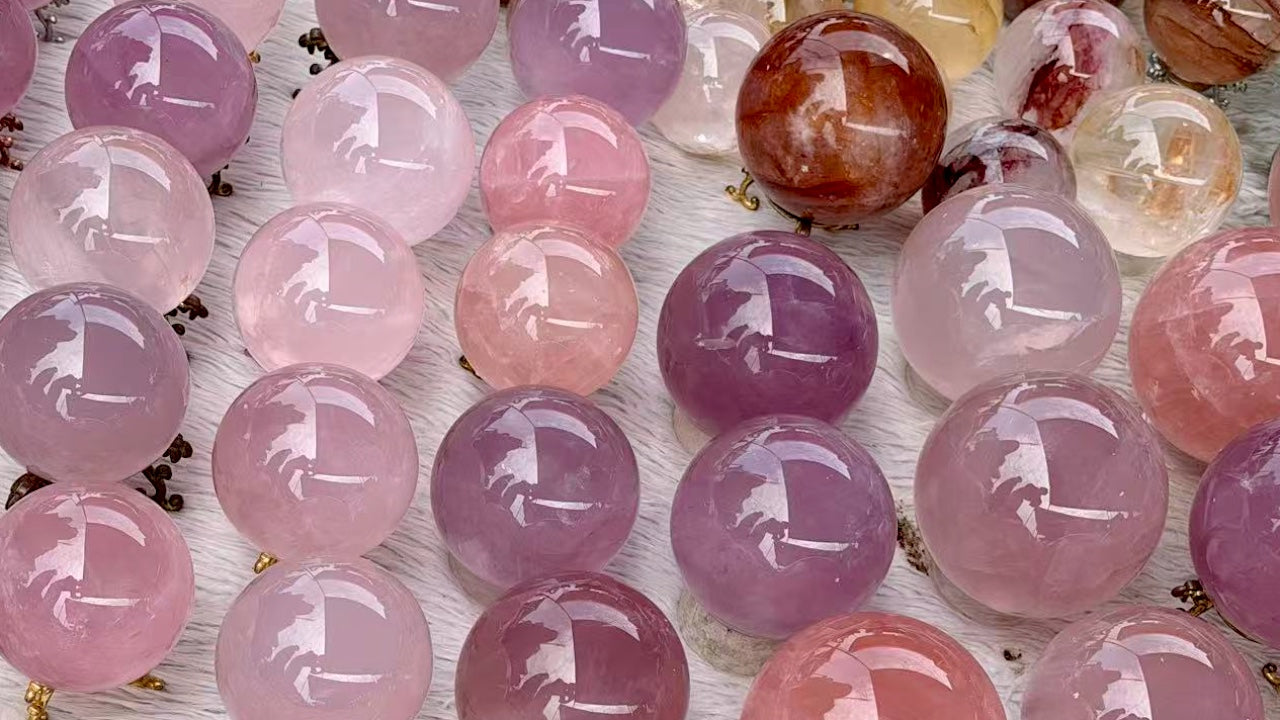
Wholesale Crystal Sourcing Guide: Buying by Material, Form, and Quantity
Most buyers reaching out for a wholesale crystal order already know part of what they want. They know they need Amethyst, or Rose Quartz, or a batch of Towers, or a case of Tumbled Stones. What's less clear, most of the time, is how to tur…
Most buyers reaching out for a wholesale crystal order already know part of what they want. They know they need Amethyst, or Rose Quartz, or a batch of Towers, or a case of Tumbled Stones. What's less clear, most of the time, is how to turn that into something a supplier can actually quote and fulfill accurately.
A supplier can't work from "I need some Amethyst" the same way they can work from a clear set of requirements — material, form, size, quantity, grade, and delivery expectations. This guide is written to help buyers who already know roughly what they want turn that into a sourcing brief a supplier can act on.
1. Three Ways to Plan a Wholesale Crystal Order
Before contacting a supplier, it helps to know which of three starting points your order is built around. Most sourcing requests fall into one of these, and knowing which one applies changes what information you'll need to gather first.
Sourcing by Material
This applies when you already know you need a specific material — Amethyst, Rose Quartz, Clear Quartz, Citrine, or another named stone — and are working outward from there.
The important thing to understand about material-first sourcing is that a material name alone doesn't define a product. The same material can exist as tumbled stones, towers, spheres, bracelets, or raw pieces, and can vary significantly in size, grade, and finish within any of those forms. Submitting a request for "Amethyst" without specifying form, size, and quantity will typically come back with clarifying questions rather than a quote.
Sourcing by Product Form
This applies when you've already decided what kind of product your shop or catalog needs — Towers, Spheres, Tumbled Stones, Raw Crystals, Carvings, Freeforms, Palm Stones, or Bracelets — and are open to selecting the material afterward.
This approach is common among retailers who are building out a specific section of their shop or online catalog and want to see what material options exist within that form before committing to specific stones.
Before committing to a category, it helps to understand how wholesale crystal product forms differ in display, customer selection, pricing, shipping, and sourcing.
Sourcing by Quantity or Assortment
This applies when the driving factor is order size or structure rather than a specific material or form — whether you're looking for a single product line, a bulk quantity of one item, or a broader mixed-material or mixed-form assortment for a larger recurring order.
Availability, order terms, and selection options depend on the specific products and current sourcing conditions, so it's worth discussing quantity and assortment structure directly with a supplier rather than assuming a fixed format applies across all products.
If the assortment itself is not yet defined, first consider how to build a balanced first wholesale crystal inventory before fixing the quantities.
Browse current stock: All Wholesale Products
2. How to Build a Clear Wholesale Sourcing Brief
Regardless of which starting point applies to your order, the clarity of your request has a direct effect on how quickly and accurately a supplier can respond. A useful sourcing brief typically includes:
- Requested material (e.g., Amethyst, Rose Quartz, Clear Quartz, Citrine)
- Requested product form (e.g., towers, spheres, tumbled stones, raw pieces)
- Size or weight range
- Quantity
- Grade or appearance requirements
- Natural or treated identity requirements
- Finish or processing requirements
- Individual item selection or mixed assortment
- Packaging requirements
- Destination country
- Target delivery date
- Photos or reference examples, if you have a specific look in mind
- Whether substitutions are acceptable if an exact match isn't available
You don't need every field filled in perfectly before reaching out, but the more of this you can provide up front, the more accurately a supplier can assess availability, quotation, lead time, and packing requirements — rather than going back and forth on basic specifications before a quote can even begin.
3. Buying One Material Across Different Product Forms
For buyers sourcing by material, it's common to need the same stone in several different forms. A retailer might want Amethyst available as tumbled stones for everyday sales, towers for display, spheres for a distinct product line, and raw pieces for customers looking for something less processed.
This approach can help build a cohesive material-based section within a shop or catalog — a customer interested in Amethyst can find it across multiple price points and formats in one place. That said, different forms of the same material often come with different size ranges, weight, price structures, availability, and packaging requirements, so each form typically needs to be sourced and quoted as its own line item rather than assumed to follow the same terms as another form of the same stone.
Browse current stock: Towers · Spheres · Tumbled Stones
4. Buying One Product Form Across Different Materials
For buyers sourcing by product form, the reverse scenario is common: you know you want Towers, for example, but you're open to — or specifically want — a range of materials within that form.
This approach is often used to build out a section of a shop or catalog with visual variety while keeping the product type consistent, which can simplify aspects like display fixtures or packaging on the retail side. It typically involves a mix of familiar materials your customers already recognize and, sometimes, a smaller quantity of trial materials to gauge interest without a large commitment. Price range and inventory depth also tend to vary by material within the same product form, so it's worth requesting a breakdown by material rather than a single blended quote.
Browse current stock: Raw Crystals · Carvings · Freeforms
5. Current Stock vs Custom Sourcing
Once you know what you're looking for, it's worth understanding the difference between ordering from current stock and requesting custom sourcing, since the two follow different timelines and levels of certainty.
Current Stock
Current stock generally allows for faster confirmation of actual available options, quantity on hand, current photos, and specific product measurements, since these items already exist in inventory rather than needing to be sourced to order.
Custom Sourcing
Custom sourcing may be needed when a request involves a specific material, form, size, or grade that isn't part of current stock, or when order quantities are larger than what's currently on hand.
Crystal Wholesale China reviews sourcing requests based on material availability, product requirements, quantity, and the level of selection required. Custom sourcing requests aren't guaranteed to be fulfilled on a fixed timeline or at a fixed price, and not every specification can be guaranteed as available — availability depends on the material and current sourcing conditions at the time of the request.
Learn more: Wholesale Services
6. Natural Variation and Batch Expectations
Crystals are natural materials, and larger wholesale orders — particularly for raw pieces, towers, spheres, and other less processed forms — commonly include some degree of variation in color, pattern, inclusions, size, weight, and formation, even within a single requested material and form.
Because of this, it's worth clarifying a few things with your supplier before an order is finalized:
- What range of variation is acceptable for your purposes
- Whether you require exact-piece selection or are comfortable with a representative lot
- Whether representative photos of similar stock are sufficient, or whether you need photos of the specific pieces being shipped
- Whether substitutions are acceptable if an exact match to a reference photo isn't available
Setting these expectations up front reduces the chance of a mismatch between what was ordered and what arrives, particularly for larger or higher-value orders.
7. What Larger Buyers Should Confirm Before Ordering
Importers, distributors, and buyers placing larger recurring orders typically need to confirm more operational detail before finalizing an order than a smaller trial purchase would require. This commonly includes:
- Exact product scope (materials, forms, and any variants included)
- Quantity broken down by material or form
- Variant structure, if the order includes multiple sizes or grades
- Packaging method
- Shipping destination
- Lead-time expectations
- Product-photo requirements
- Labeling or packing requests
- Whether partial shipment is acceptable if not all items are ready simultaneously
- How unavailable items should be handled — substitution, backorder, or removal from the order
These requirements should be confirmed with the supplier before the order is finalized.

8. How Crystal Wholesale China Handles Sourcing Enquiries
Crystal Wholesale China supplies wholesale crystals across multiple materials and product forms for retailers, importers, distributors, gift stores, metaphysical shops, and online sellers.
When submitting a sourcing request, it's helpful to include:
- The material you're looking for
- The product form
- Quantity
- Size or weight range
- Destination
- Timing expectations
- Reference photos, if you have a specific look in mind
From there, the request is reviewed based on current stock availability and, where relevant, custom sourcing feasibility for the specific material, form, and quantity involved.
Frequently Asked Questions (Procurement)
Can I request one crystal material in several product forms? Yes, this is a common way to source. Each form is typically quoted separately, since size, weight, price structure, and availability can differ between forms of the same material.
What details should I provide for a bulk sourcing request? Material, product form, size or weight range, quantity, grade or appearance preferences, packaging requirements, destination, and target delivery date all help a supplier assess availability and provide an accurate quote.
Can I combine different materials or product forms in one wholesale order? Mixed selections may be possible depending on the products, quantities, and current availability. Requirements should be confirmed before the order is finalized.
How does custom sourcing differ from ordering current stock? Current stock can generally be confirmed faster, since actual quantities, photos, and specifications already exist. Custom sourcing involves reviewing feasibility for a specific material, form, size, or grade that isn't currently on hand.
Can I request photos of available stock before ordering? Photo availability depends on the product type, quantity, and whether the order involves individual pieces or representative wholesale lots.
How are natural variations handled in larger orders? Buyers should clarify acceptable variation range, whether exact-piece selection is needed, and whether representative photos are sufficient before an order is finalized, since natural material can vary in color, pattern, inclusions, and size even within one requested product.
What factors affect sourcing lead time? Lead time can be affected by material availability, product form, order quantity, whether the order involves current stock or custom sourcing, and shipping destination.
Can Crystal Wholesale China source a specific size, grade, or finish? Requests can be reviewed, but availability and feasibility depend on the material, product form, quantity, and sourcing conditions at the time of the request.
Suggested Internal Links
- All Wholesale Products
- Towers
- Spheres
- Tumbled Stones
- Raw Crystals
- Carvings
- Freeforms
- Palm Stones
- Crystal Bracelets
- Wholesale Services
Sourcing a wholesale crystal order comes down to turning a general idea — a material, a product form, or a quantity — into a request specific enough for a supplier to act on. Whether you're building a request around a single material, a single product form, or a broader mixed assortment, the clearer your sourcing brief, the more accurately it can be quoted, fulfilled, and delivered on the terms your business actually needs.