
Choosing Wholesale Crystals for Different Retail Business Models
A crystal shop, a gift store, and an online retailer can all be sourcing from the same supplier — and still need very different wholesale orders. The customer walking into a dedicated crystal shop is looking for something different than th…
A crystal shop, a gift store, and an online retailer can all be sourcing from the same supplier — and still need very different wholesale orders. The customer walking into a dedicated crystal shop is looking for something different than the customer browsing a gift store shelf, and the product photo that sells well online doesn't always translate to what works in a physical display case.
This guide is written to help buyers think through their sourcing decisions based on their specific business model, rather than working from a generic "what to stock" list. The starting point isn't the product — it's the business.
1. Crystal Shops: Building a Broad Product Collection
A dedicated crystal shop typically serves customers who are already interested in the category and expect to see range — in material, in form, and in price point. This tends to call for the broadest wholesale selection of any business model discussed here.
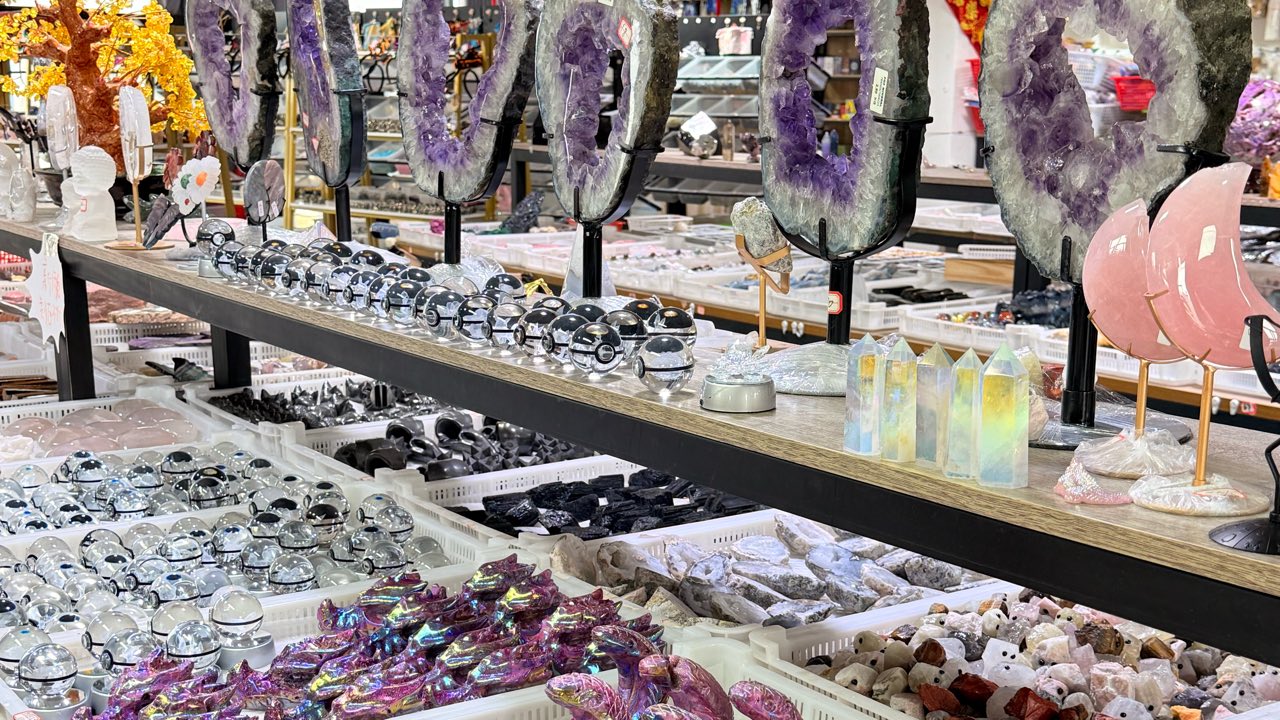
For a crystal shop, product selection generally spans multiple materials alongside multiple product forms, and typically includes all three tiers of inventory: everyday products for accessible, repeat purchases; display products that shape the shop's visual identity; and premium pieces that give returning customers something new to look at.
Crystal shops commonly source across a wide range of forms, including:
Browse current stock: Towers · Spheres · Tumbled Stones · Raw Crystals
Because the customer base is already engaged with the category, a crystal shop's sourcing decisions are often less about explaining what a product is and more about offering enough variety that a customer has genuine choice within their visit.
2. Gift Stores: Choosing Accessible and Gift-Friendly Products
Gift stores serve a different customer than a crystal shop does — often someone who isn't shopping specifically for crystals but is looking for a gift, a small treat, or a decorative item that happens to be a crystal product. This changes what matters in sourcing.
For gift stores, product selection tends to prioritize:
- Easy customer understanding — products that don't require background knowledge to appreciate
- Attractive packaging or presentation — since gift-buying customers are often influenced by how a product looks ready-to-give
- A range of price points — to suit different gift budgets and occasions
- Suitability for gift occasions — birthdays, holidays, or general small-gift purchases
Products that often fit this context include bracelets, small carvings, tumbled stones, and decorative pieces — items that are approachable and visually clear without requiring a longer explanation.
Browse current stock: Crystal Bracelets · Carvings · Tumbled Stones
This doesn't mean these are the only products a gift store should carry, or that they're guaranteed top performers — product performance depends on the specific shop and customer base. It does mean these categories tend to align well with how gift-store customers shop.
3. Metaphysical Stores: Combining Education and Product Variety
Metaphysical stores generally serve customers who are more engaged with individual materials and often expect some depth of selection alongside the products themselves — customers in this context are frequently asking questions and comparing specific pieces before purchasing.
For this business model, sourcing decisions commonly emphasize:
- Product variety across both material and form
- Material-specific depth, since customers may be looking for a particular stone rather than browsing generally
- Display pieces that allow customers to see and select specific specimens
- Raw and natural products, which are often of particular interest in this retail context
Products commonly sourced for metaphysical stores include towers, spheres, raw crystals, and individual specimens — forms that allow for a more considered, piece-by-piece selection process in-store.
Browse current stock: Towers · Spheres · Raw Crystals
4. Online Crystal Retailers: Choosing Products That Work Digitally
Selling online introduces a different set of sourcing considerations than a physical shop, because the product photo — not the in-hand experience — is what drives the purchase decision.
For online retailers, product selection is often shaped by:
- Photography potential — how well a piece translates into a clear, appealing product image
- Product consistency — since customers can't handle the piece before buying, consistency between listing photos and what actually ships matters more than in a physical shop
- Shipping considerations — weight, fragility, and packaging requirements affect cost and handling
- Clear product descriptions — size, weight, and material details need to be communicated accurately since the customer can't verify them in person
- Customer understanding at a distance — products need to be identifiable and understandable from a photo and description alone
Forms that are commonly sourced for online retail include towers, spheres, bracelets, and tumbled stones — products that photograph clearly and ship in a relatively predictable way.
Browse current stock: Towers · Spheres · Crystal Bracelets
5. Boutique Stores: Creating a Curated Crystal Collection
Boutique retailers — whether standalone or as a section within a broader lifestyle or home goods store — typically take a different approach than a high-volume crystal shop. The goal is usually a smaller, more intentional selection rather than broad coverage.
For boutique retailers, sourcing decisions often prioritize:
- A unique or distinctive selection, rather than the widest possible range
- Visual identity, where the crystal selection needs to align with the store's broader aesthetic
- Higher perceived value per piece, since boutique retail often centers fewer, more considered items rather than volume
- A limited but intentional inventory, chosen for how well it fits the store's overall presentation
This context often draws more heavily on premium pieces, unique carvings, and statement items — products chosen for their individual character rather than for filling out a broad category.
Browse current stock: Carvings · Freeforms

6. How to Build a Balanced Product Mix
Regardless of business model, most retailers end up combining products across the three inventory tiers discussed in our first guide — everyday products, display products, and premium pieces — but the proportion and specific product forms within each tier shift depending on the business model. Before deciding on that mix, it can help to understand how different crystal product forms affect retail selection.
A crystal shop might lean toward breadth across all three tiers. A gift store might weight heavily toward accessible everyday and display products. A metaphysical store might invest more in raw and specimen-based display and premium pieces. An online retailer might prioritize forms that photograph and ship well across all three tiers. A boutique might concentrate almost entirely on a curated display and premium selection.
This guide builds on the sourcing logic covered elsewhere in this series. For structuring a first wholesale order, see how to build a balanced wholesale crystal inventory. For maintaining and updating an existing collection, see our guide on refreshing inventory with new wholesale products. For translating a specific material or form need into a clear supplier request, see our wholesale sourcing guide.
Frequently Asked Questions
How should a gift store choose wholesale crystals? Gift stores generally benefit from products that are easy for customers to understand at a glance, present well as gifts, and cover a range of price points. Bracelets, small carvings, and tumbled stones commonly fit this approach, though the right mix depends on your specific customer base.
What products work well for online crystal retailers? Online retailers often prioritize products that photograph clearly, ship predictably, and can be described accurately without the customer handling the piece in person. Towers, spheres, bracelets, and tumbled stones are commonly sourced for this reason.
Should new retailers focus on popular products or unique pieces? This depends on your business model and customer base rather than a single correct answer. Broader-format shops often benefit from a wider mix of familiar products, while boutique or curated retailers may lean more toward unique, distinctive pieces. There's no data-backed ranking of "most popular" products that applies uniformly across business models.
How can Crystal Wholesale China help retailers choose products? Crystal Wholesale China works with retailers across multiple business models — crystal shops, gift stores, metaphysical retailers, online sellers, and boutique stores — and can help think through product selection based on your specific format and goals.
Can I build a wholesale order based on my store type? Yes. Sharing your business model, customer base, and display or sales format with Crystal Wholesale China can help shape a sourcing request suited to your specific context, rather than working from a generic product list.
Suggested Internal Links
There's no universal wholesale product list that works equally well for every retailer. A crystal shop, a gift store, a metaphysical retailer, an online seller, and a boutique each serve a different customer with different expectations — and the sourcing decisions that follow should reflect that. Starting from your business model, rather than a generic product list, is the more reliable way to build a wholesale collection that actually fits your shop.