
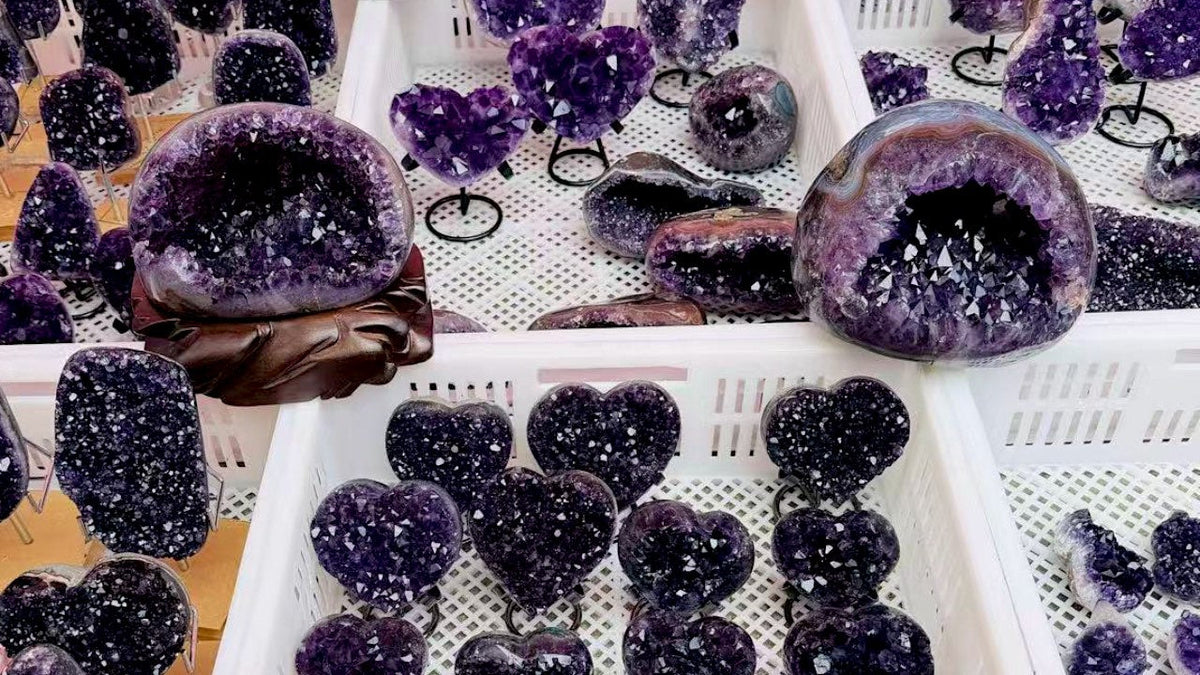
How to Choose Wholesale Crystal Products for Online Retail Stores
Online retailers frequently face a specific sourcing problem: customers can't pick up a piece, feel its weight, or compare it directly to the one next to it. Every purchasing decision is made from a photo and a written description. This ch…
Online retailers frequently face a specific sourcing problem: customers can't pick up a piece, feel its weight, or compare it directly to the one next to it. Every purchasing decision is made from a photo and a written description. This changes what matters most when selecting wholesale crystal inventory for a Shopify, Etsy, or independent online store — product accuracy in photography, sizing, and description tends to carry more weight than it does for in-person retail.
This guide covers what to consider when sourcing for an online-only or online-primary sales channel.
1. Why Online Sourcing Decisions Differ From In-Person Retail
In a physical store, a customer who picks up a tumbled stone and finds it smaller or a different shade than expected simply chooses another one — there's little transaction friction. Online, that same mismatch between expectation and reality tends to surface after purchase, as a return, a negative review, or a support request instead of a simple in-store adjustment.
Many online retailers ask not just "what looks good" but "what can I represent accurately enough that the product matches what the customer expected when it arrives." Some product categories are commonly easier to represent accurately than others, which is a relevant factor in what to stock. This channel-specific filter is part of the broader need to choose wholesale crystals based on your retail business model.
2. Product Consistency Matters More Online
Natural crystal products vary piece to piece — that's inherent to the material. In a physical store, this variation can be a selling point, since customers often enjoy choosing their own specific piece. Online, the same variation can become a liability if a customer receives something that looks meaningfully different from the listing photo.
This doesn't mean online sellers should avoid naturally varied materials — it means the level of variation is worth factoring into how a product is presented. Materials or forms with more piece-to-piece consistency are often easier to represent with a single photo. Materials with more natural variation, such as raw crystals or freeforms, commonly benefit from either individual photography per piece or clear listing language describing that variation as expected.

3. Photography Considerations by Product Form
Some product forms tend to be simpler to photograph consistently than others, which is worth factoring into sourcing decisions for a store relying on photos to sell. To weigh those differences before ordering, you can compare crystal product forms for online selling.
Tumbled stones, bracelets, and palm stones often have simpler, more repeatable shapes that a single well-lit photo can represent fairly well across a batch. Towers, spheres, carvings, freeforms, and raw crystals can benefit from multiple angles per listing, since individual shape, proportion, and finish are often part of what a customer is evaluating.
This doesn't rule out any category for online sale — it affects how much photography investment a category may need to be represented fairly. Photo availability and exact-piece selection depend on product type, quantity, current stock, and order structure, so it's worth discussing photography options directly with your supplier for the specific products you're sourcing.
4. Size and Weight Information Needs to Be Explicit
Without the ability to hold a product, online customers rely on stated measurements to judge scale. A listing photo alone, even a good one, doesn't reliably convey size, since customers can misjudge scale from images when no measurement is given or the reference object is unclear.
For most product forms, it's worth sourcing with a plan for how size will be communicated:
- Exact dimensions (length, width, height, or diameter) rather than vague size categories like "small" or "large"
- Weight, particularly for pieces sold individually rather than by set
- A consistent reference object or scale marker in photos, such as a ruler or a coin, when dimensions alone might be hard to visualize
Whether a supplier can provide this information at the batch or individual-piece level is worth confirming directly, since inconsistent or missing sizing data makes accurate online listings harder to build.
5. Natural Variation Is Worth Setting as an Expectation
Because crystals are a natural material, some degree of variation between the product photographed and the product shipped is common, even with consistent forms like tumbled stones. The practical approach isn't to eliminate variation — it's to source with a clear understanding of how much variation is typical for a given material and form, and to set that expectation in the listing itself.
Language such as "natural variation in color and pattern should be expected," placed directly in a listing description, can reduce the likelihood that normal material variation is interpreted as a quality issue by the customer. This is a listing-writing practice, but it starts with a sourcing decision — knowing, before you list a product, how much variation that specific material and form typically shows.
6. Packaging Considerations for Direct-to-Customer Shipping
Online orders usually ship in smaller quantities directly to end customers, which is a different packaging requirement than a bulk wholesale shipment to a retail store. When sourcing for online resale, it's worth confirming with your supplier:
- Whether bulk packaging is suitable for repackaging into individual customer orders, or whether pieces arrive pre-packaged in a way that supports direct resale
- How fragile forms (towers, spheres, carvings) are protected in bulk shipment, since repackaging for individual shipping is often needed afterward
- Whether the supplier can provide any product information that helps you write accurate listings
Specific packaging services and formats vary by supplier and should be confirmed directly rather than assumed.
7. Matching Product Categories to Online Customer Expectations
Online crystal customers often shop by material or by intended use — a gift, a specific color for a room, a piece to add to a collection — rather than browsing a physical shelf. This affects which product information matters most in a listing:
- Material name and, where relevant, mineral family
- Form (tumbled, tower, sphere, etc.), since this affects both price and the customer's mental image of the product
- Size and weight, as covered above
- Any natural variation disclosure
Sourcing decisions that support clear, complete listings across these points can help reduce both pre-purchase questions and post-purchase disputes, since the customer has a more accurate picture before buying.
8. Building an Online-Focused Assortment
For a new or growing online store, a practical starting point often leans toward forms that are easier to represent consistently — tumbled stones, bracelets, and palm stones — while introducing higher-variation forms like towers, raw crystals, or carvings more selectively, with a photography and description plan built around their individual variation.
This isn't a rule that online stores should avoid high-variation products — many online sellers build a business around raw crystals or one-of-a-kind carvings specifically because of their uniqueness. It does mean the sourcing decision for these categories often comes with a corresponding commitment to more detailed product representation.
FAQ
Should online stores avoid naturally varied products like raw crystals? Not necessarily. High-variation products can sell well online, but they typically call for more detailed, often individual, photography and clear variation disclosure in the listing to manage customer expectations.
What size information should I request from my supplier? At minimum, dimensions and weight per piece or per standard unit. For batch-sourced items like tumbled stones, an average size range and any notable size variation within the batch can also be useful.
How do I reduce return rates related to size misjudgment? Including exact measurements and a scale reference in listing photos, and avoiding vague descriptive terms like "small" or "large" without a specific measurement, are commonly used practices.
Is it worth photographing every individual piece for online sale? This depends on the product's natural variation. Low-variation forms like tumbled stones or bracelets often don't require individual photography, while high-variation forms like raw crystals, freeforms, or carvings commonly benefit from it.
What packaging should I request for products I plan to resell online? Ask your supplier whether bulk packaging is designed for repackaging into individual orders, and confirm protective packaging standards for fragile forms you'll need to ship again to end customers.
Browse related categories: Towers, Spheres, Crystal Bracelets, Tumbled Stones, or see Wholesale Services for sourcing details.